At Kotilo on Mount Kotilion
The Sanctuaries of Aphrodite and Artemis Orthasia
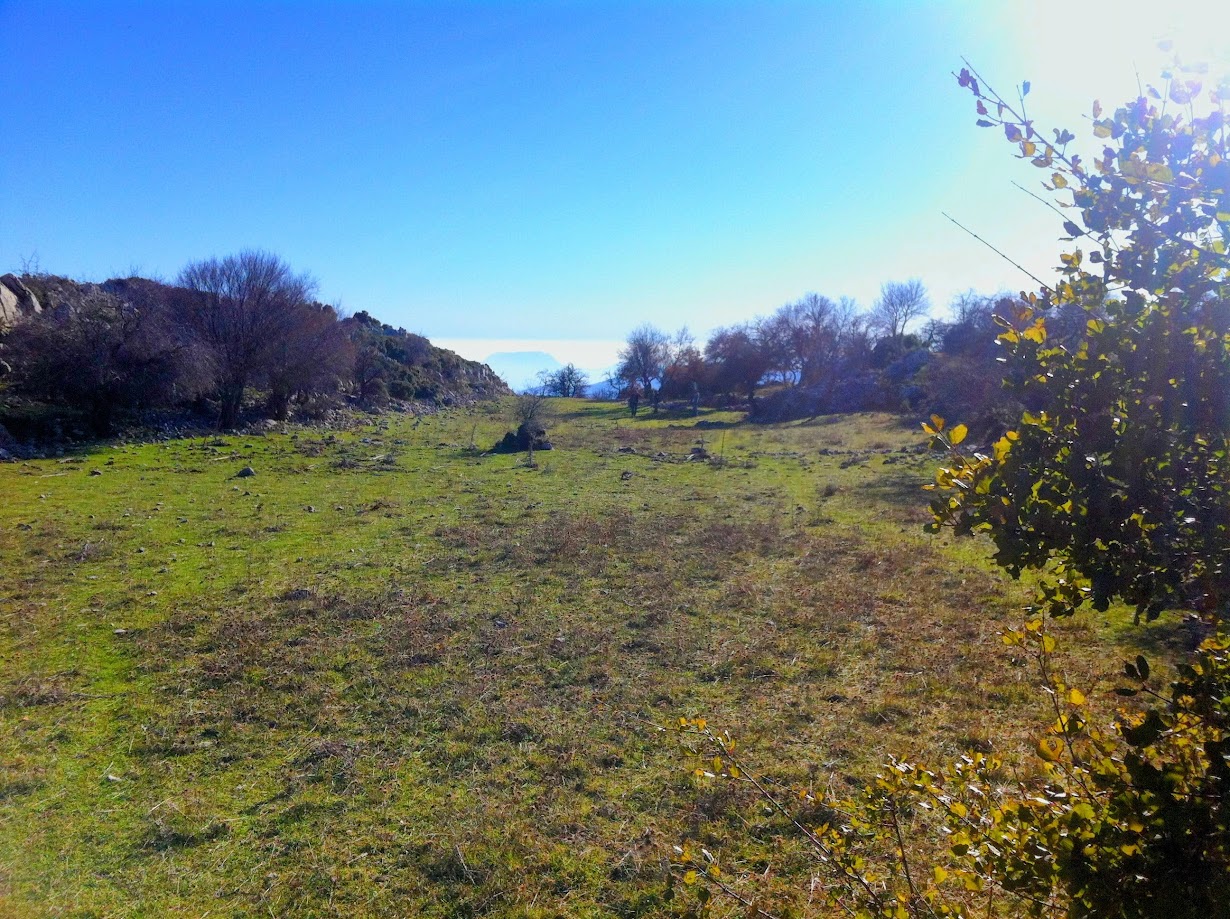
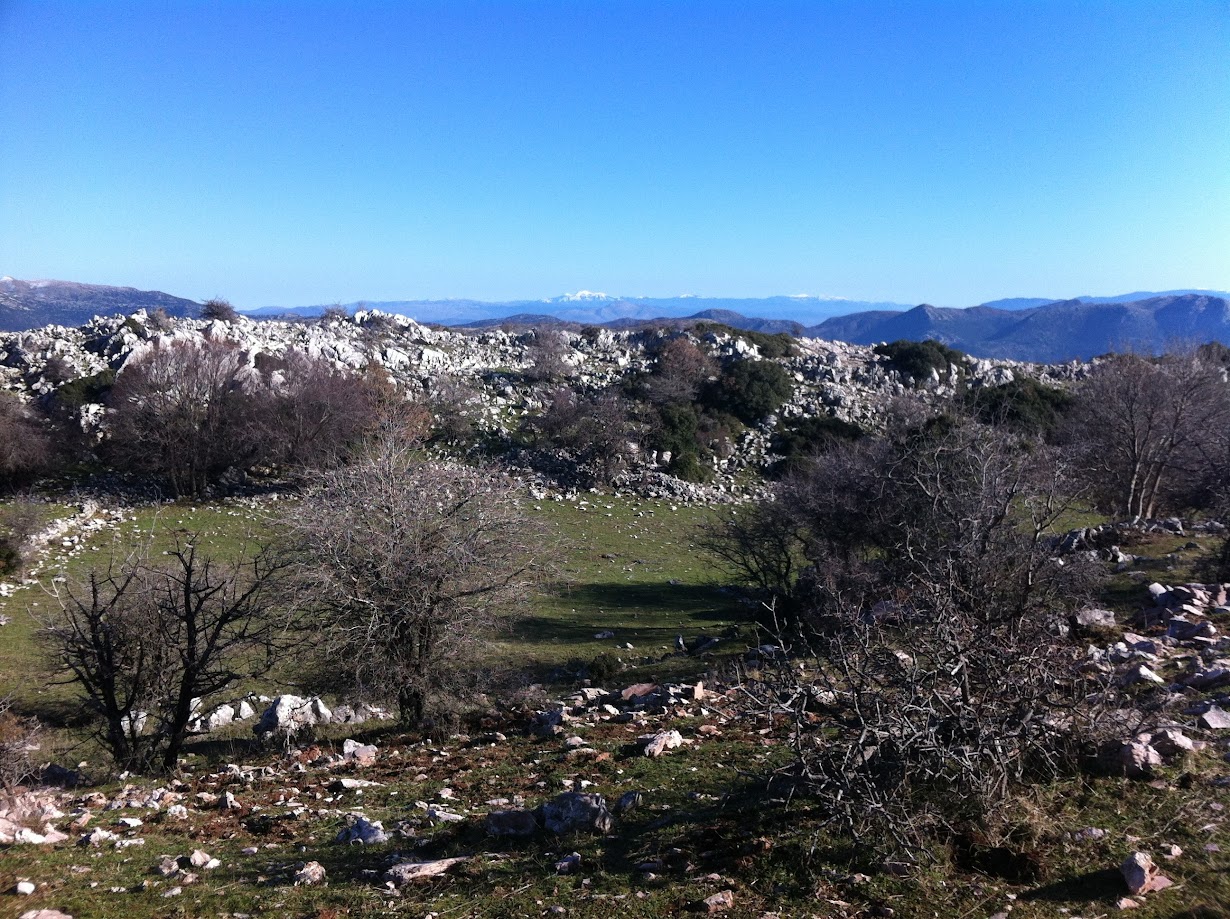
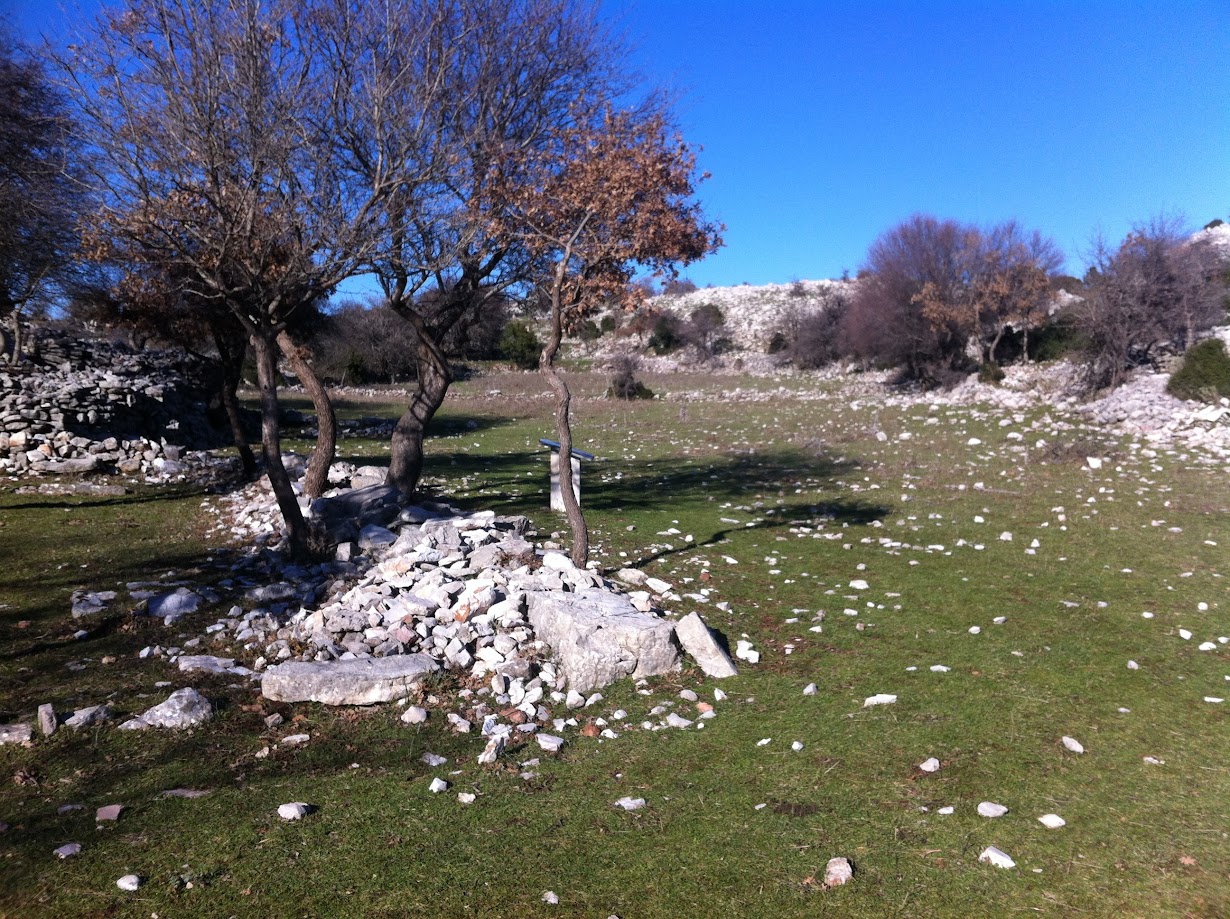
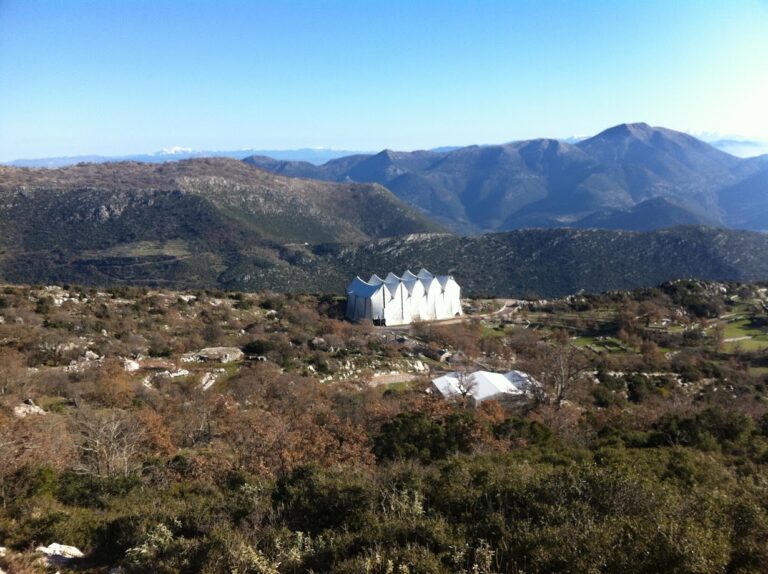
On Mount Kotilion, at an altitude of 1,226 m, northwest of the Temple of Apollo Epicurius and approximately 100 m above it, lie the remains of two small sanctuaries.
“Above the sanctuary of Apollo Epicurius is a place called Kotilo, from which Aphrodite of Kotilo takes her name. There was a temple to her, whose roof no longer survived, and also her cult statue.” Pausanias 8.41.10. English rendering of the Greek translation by N. Papachatzis.
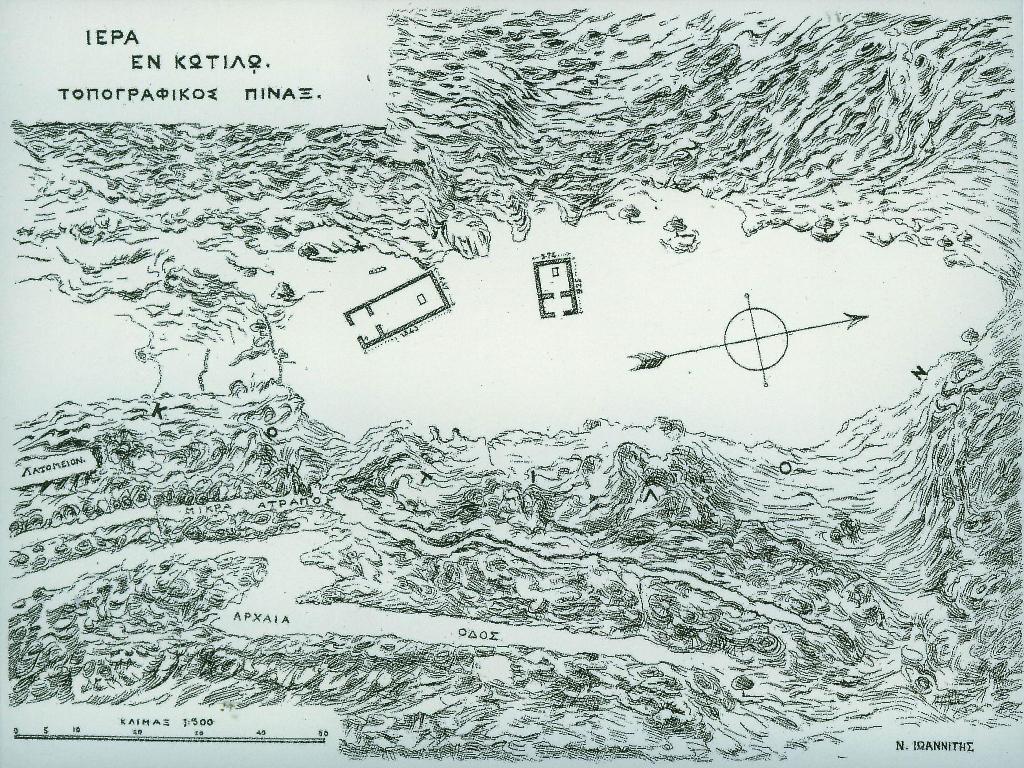
The sanctuaries appear to have been founded in the sixth century BC by Phigaleians of modest means who had settled at Bassae.
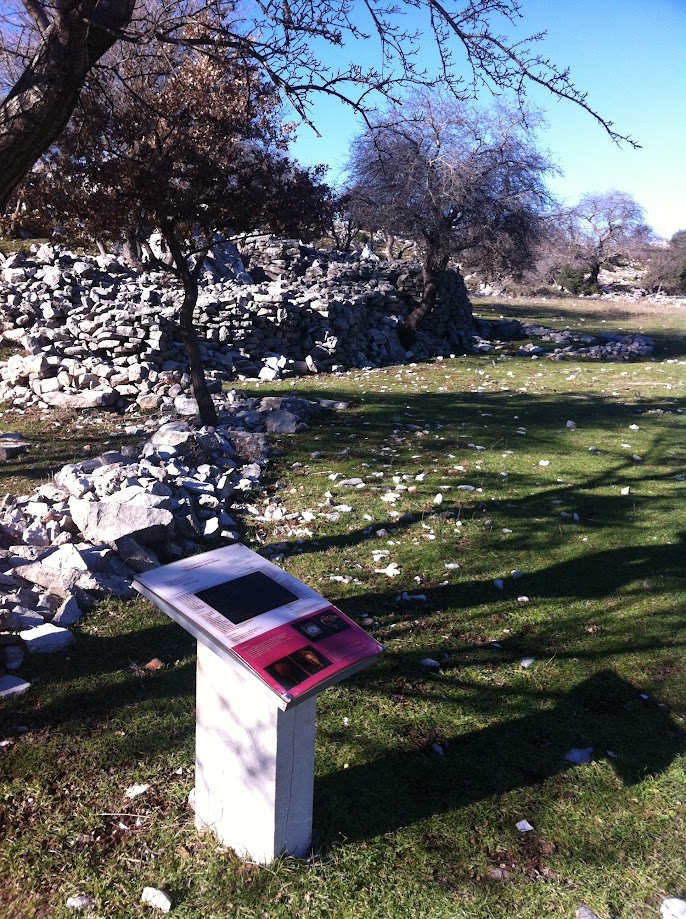
The remains were excavated in 1902–1903. The archaeologist K. Kourouniotis identified the two small temples as those of Aphrodite of Kotilo and Artemis Orthasia. Both were simply constructed, with walls founded on the natural bedrock, and each comprises a pronaos and cella.
Finds included animal bones from sacrifices, bronze mirrors and terracotta female busts dedicated by worshippers.
The temples remained in use through the Archaic and Classical periods until their abandonment at the end of the third century BC. The sanctuary of Apollo below them continued to function during the Hellenistic and Roman periods before it, too, was abandoned.
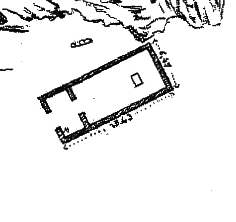
The Temple of Artemis Orthasia, protectress of young children, is the southern and larger of the two temples at Kotilo. Its pronaos and cella can be distinguished, and its walls were built of roughly dressed stones bonded with clay.
The temple faces from south to north. The Temple of Apollo Epicurius also follows a north–south axis but faces in the opposite direction. This unusual orientation may reflect cult practices associated with Arcadian religious traditions.
The goddess’s cult statue probably stood at the northern end of the temple on a low limestone base.
Important evidence for the identification of the temple was a manumission inscription engraved on a bronze tablet, found at the building’s southeast corner. It refers to the worship of Artemis Orthasia, Apollo Bassitas and Pan Sinoeis.
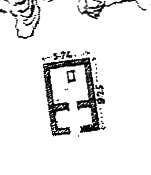
The Temple of Aphrodite lies a few metres north of the Temple of Artemis. It has the usual east–west orientation of ancient Greek temples, unlike the neighbouring temple and the Temple of Apollo Epicurius.
Smaller in size, it comprises a pronaos and cella. Its walls were built of stone blocks bonded with clay.
A stone base survives inside the cella, probably supporting the cult statue of Aphrodite, worshipped here as a protectress of women’s fertility.
The temple was investigated in 1902–1903 by P. Kavvadias and the then Ephor of Antiquities, K. Kourouniotis. The latter identified it as the Temple of Aphrodite of Kotilo on the basis of Pausanias’s description.
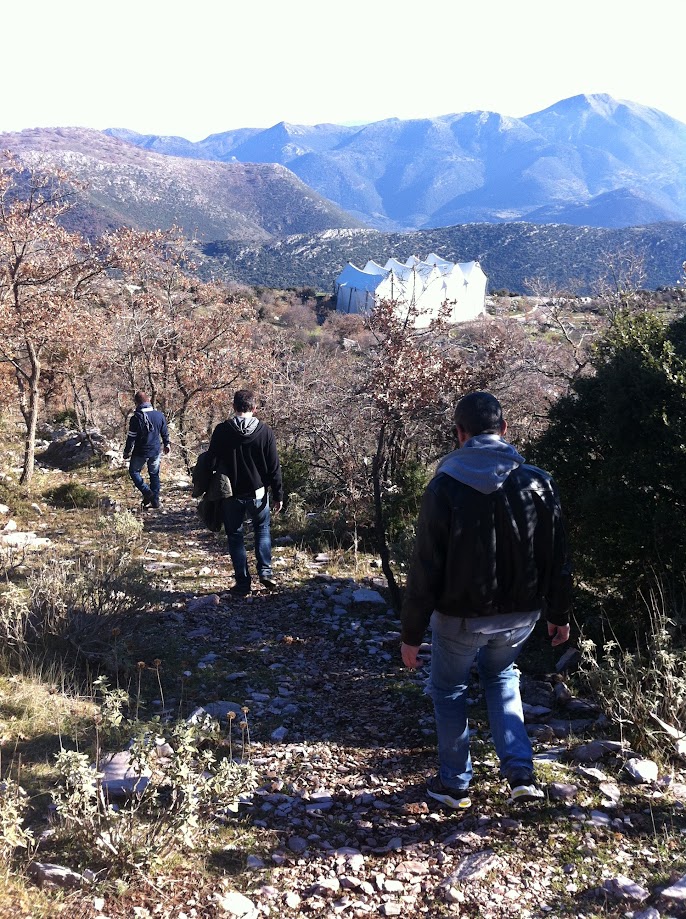
The two small temples are reached by a steep, rough path, requiring a walk of approximately fifteen minutes.
When descending from Mount Kotilion, visitors can use the shelter over the Temple of Apollo Epicurius as a landmark to help them keep to the path.