The Committee for the Conservation of the Temple of Apollo Epicurius (ESNEA)
The establishment of ESNEA in 1975 marked the beginning of a systematic modern programme for the temple’s restoration. The committee was responsible for planning and supervising the work required for its conservation.
Comprising archaeologists, architects, civil engineers and chemists, the committee investigated the temple’s needs and structural weaknesses through systematic excavation and detailed architectural surveys.
Preparatory work carried out by 2000 included installing a large gantry crane around the monument to lower and lift architectural members, providing facilities for staff and visitors, and procuring tools.

Anti-seismic Support Structure
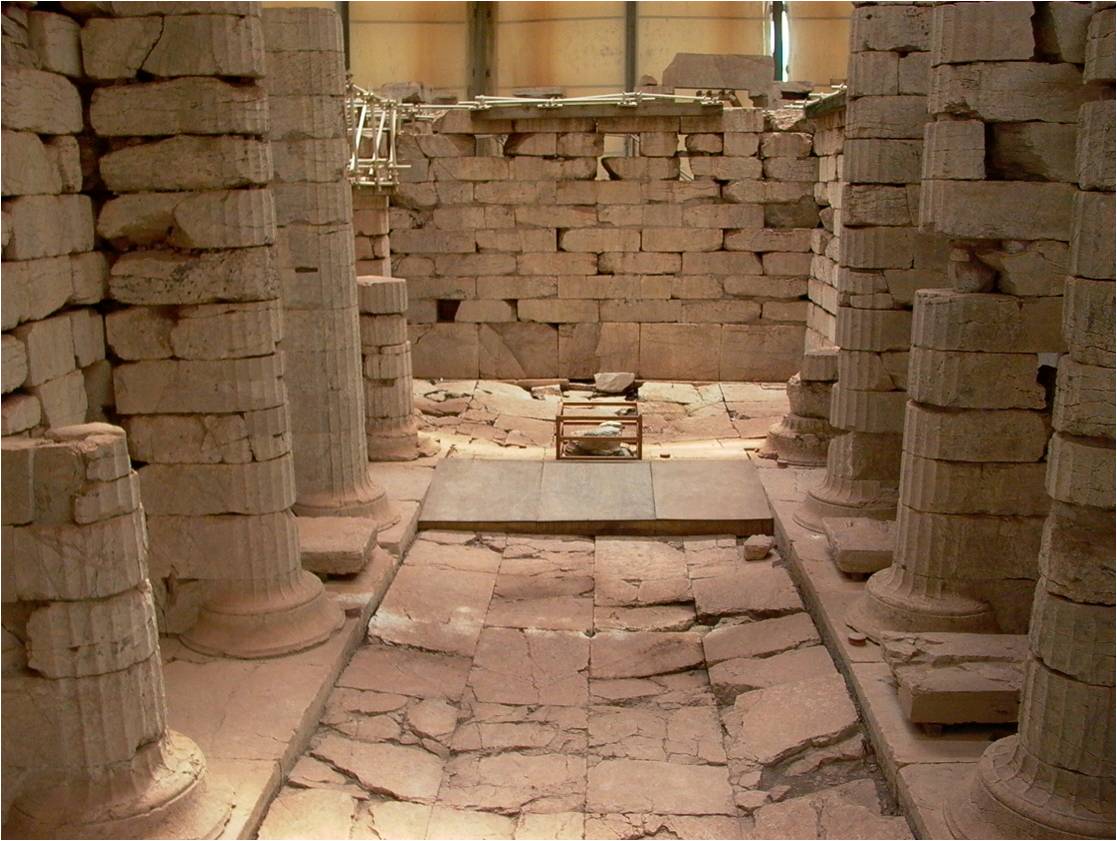
A new anti-seismic support structure was installed in 1985. Fully reversible, it improves the structural stability of the architraves and columns pending the comprehensive restoration of the monument.
The Protective Shelter
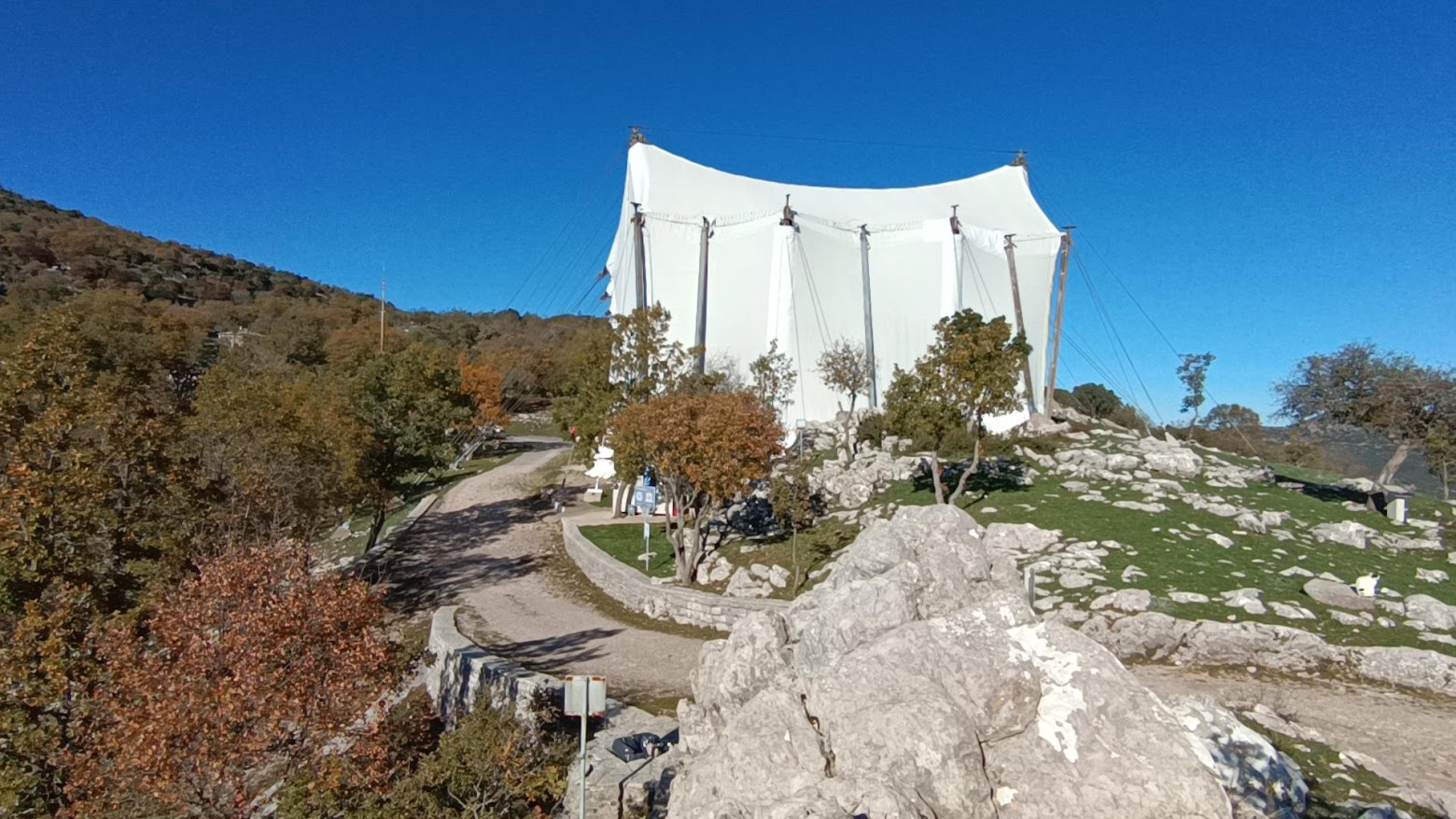
Restoration of the Northern Pteron, 2001–2015
Work on the northern pteron began in January 2001, funded first by the Community Support Framework 2000–2006 and subsequently by the National Strategic Reference Framework 2007–2013. The first phase continued until June 2009. The second began in the latter half of 2011 and was completed at the end of 2015.
- lowering the architrave blocks;
- removing the columns as complete units;
- dismantling the blocks of the three crepidoma steps and the uppermost foundation course, the euthynteria;
- consolidating the foundations, restoring the dismantled blocks and conserving their material;
- reinstating the blocks with new titanium connectors;
- returning the columns to the monument;
- restoring, reinstating and reconnecting the architrave blocks.
In total, restoration of the northern pteron between 2001 and 2015 involved 212 restored architectural members, 190 carved supplements fitted to ancient members, 1,204 joins, and ten entirely new stone members.
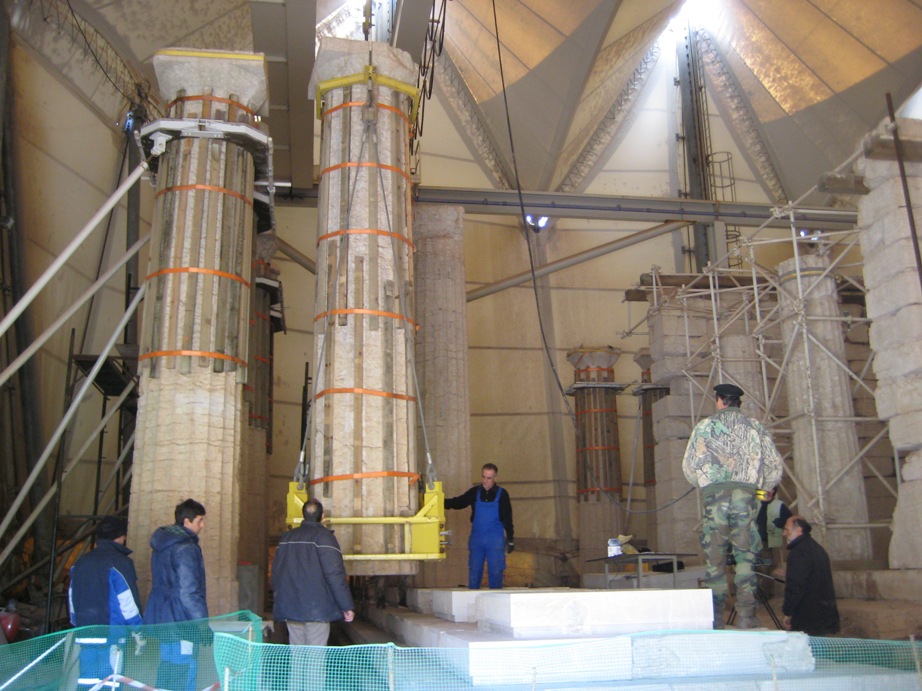

The work completed during these fourteen years restored the northern part of the ancient building: the six columns of the north façade, the northernmost sections of both long sides, each including one column, and the enclosed floor area.
The scale of the work on the northern pteron of the Temple of Apollo Epicurius can be compared with the complete restoration of a small ancient monument, such as the Temple of Athena Nike on the Athenian Acropolis.
Consolidation of the Long Sides, 2019–2023
Following the dissolution of ESNEA, responsibility for the programme passed to the central services of the Ministry of Culture.
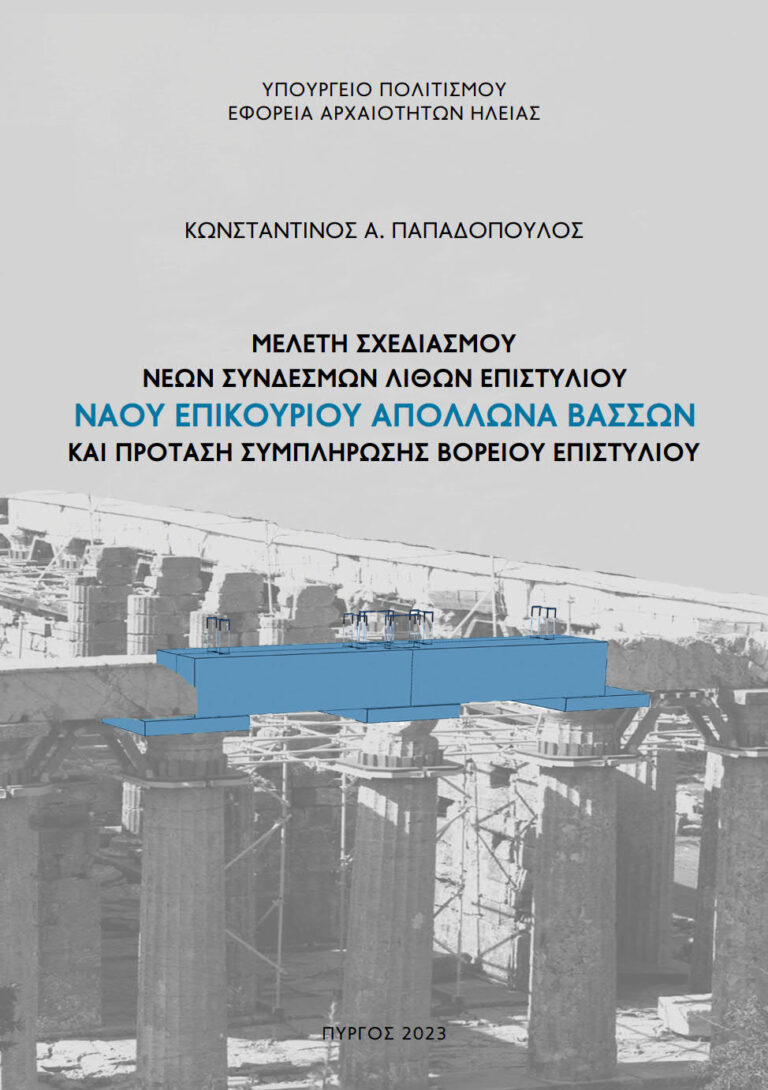
After approval in September 2015 of the study by K. Papadopoulos and V. Savvatianou, the first phase of consolidation of the long sides—the third phase of the overall restoration programme—was included in the Operational Programme Competitiveness, Entrepreneurship and Innovation 2014–2020, under the title “Restoration and Enhancement of the Temple of Apollo Epicurius at Bassae — Phase III”.
The subproject “Restoration of the Northernmost Sections of the Long Ptera of the Temple of Apollo Epicurius at Bassae” was carried out directly by the Ephorate of Antiquities of Ilia. It ran from February 2019 to November 2023, at a cost of €1,276,443.84.
Its two principal objectives were:
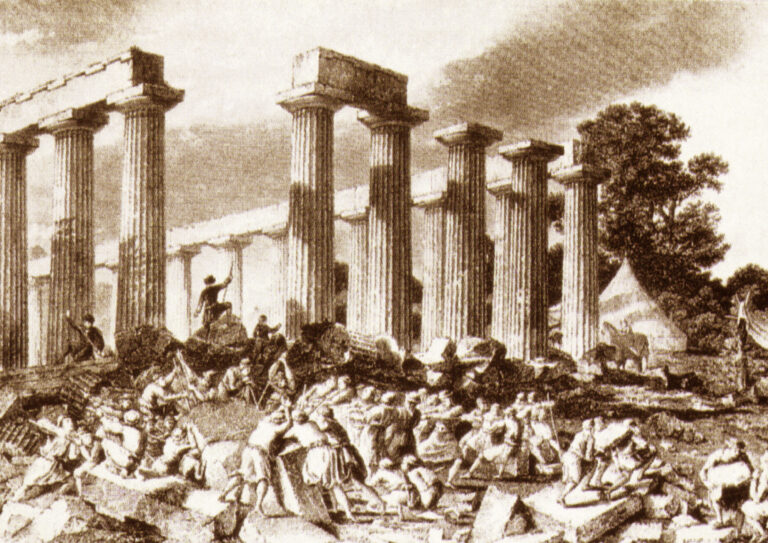
(a) to consolidate two sections of the monument: one on the east side, comprising the third and fourth columns from the north, and one on the west side, comprising the third column from the north; and (b) to restore and reinstate three of the six missing blocks of the north architrave. A recent study indicates that one of these blocks fell in the thirteenth or fourteenth century AD, probably during a strong earthquake together with a few others. The other two were deliberately brought down by the excavators in the summer of 1812 to prevent them from falling during the work.
To achieve these objectives, work in the intervention areas included:
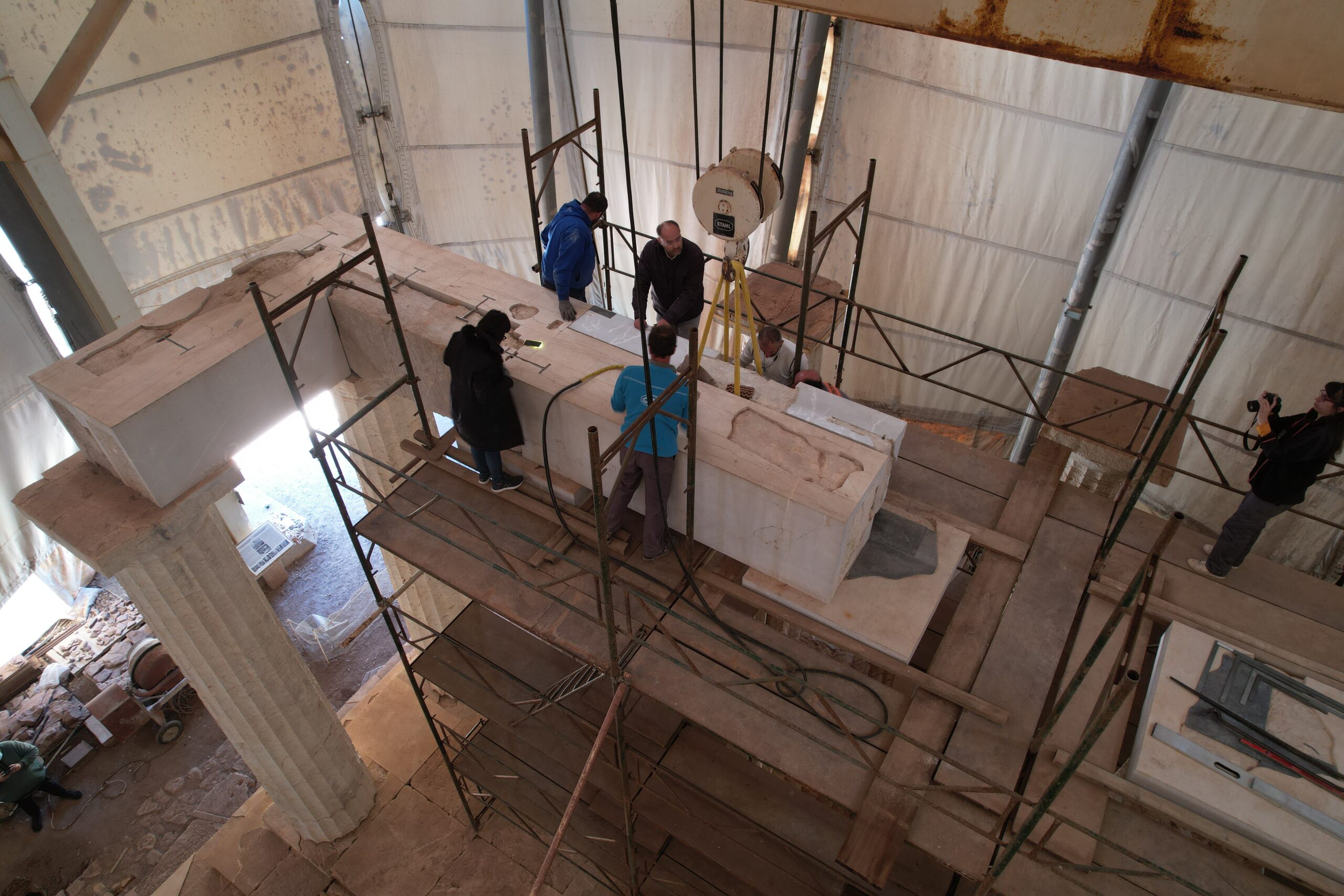
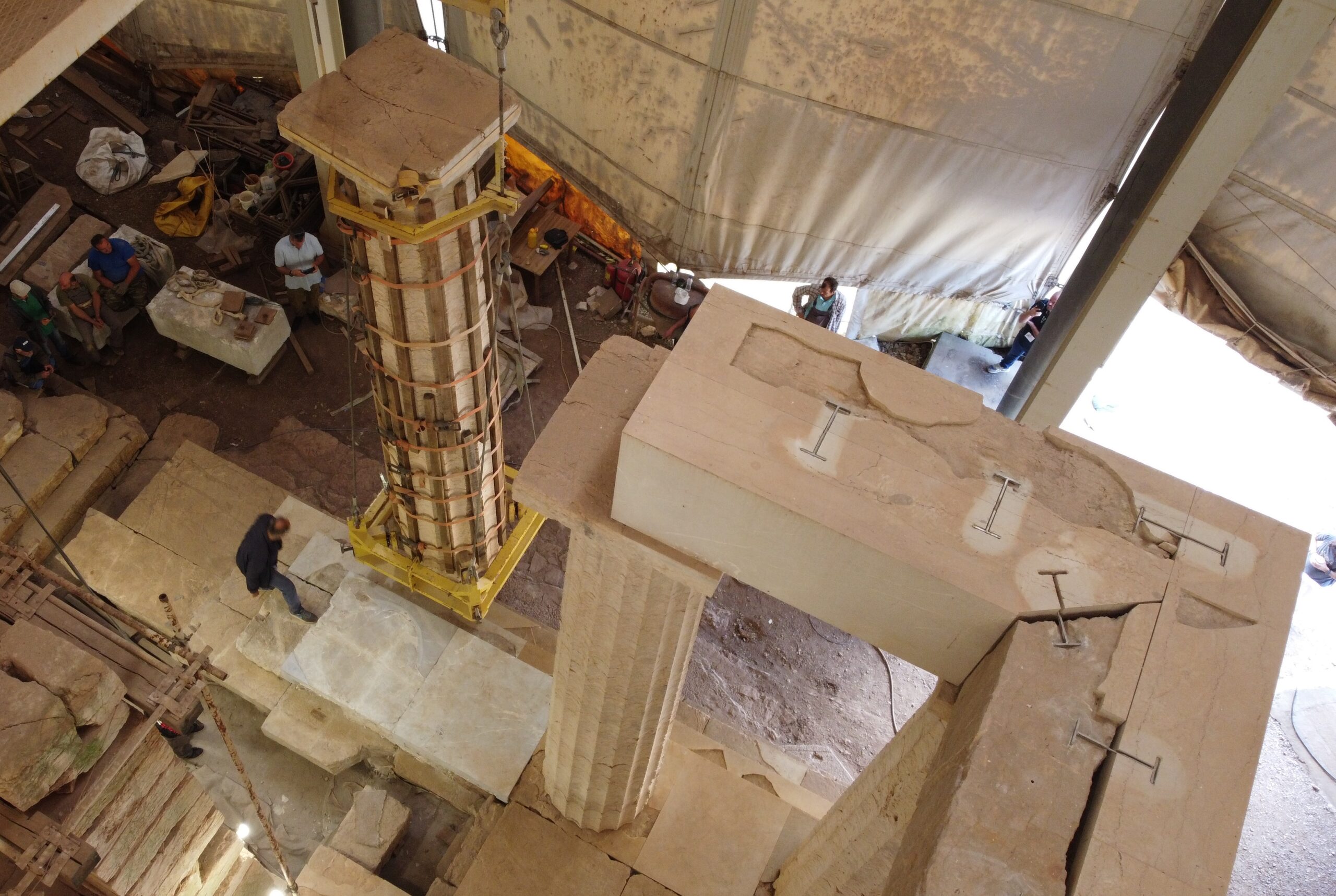
(i) lowering architrave blocks, removing complete columns (Fig. 1), and dismantling blocks of the crepidoma and euthynteria;
(ii) strengthening the foundations by constructing supporting and retaining walls at the western foundation and forming a layer of stabilised clay between the bedrock and the euthynteria blocks;

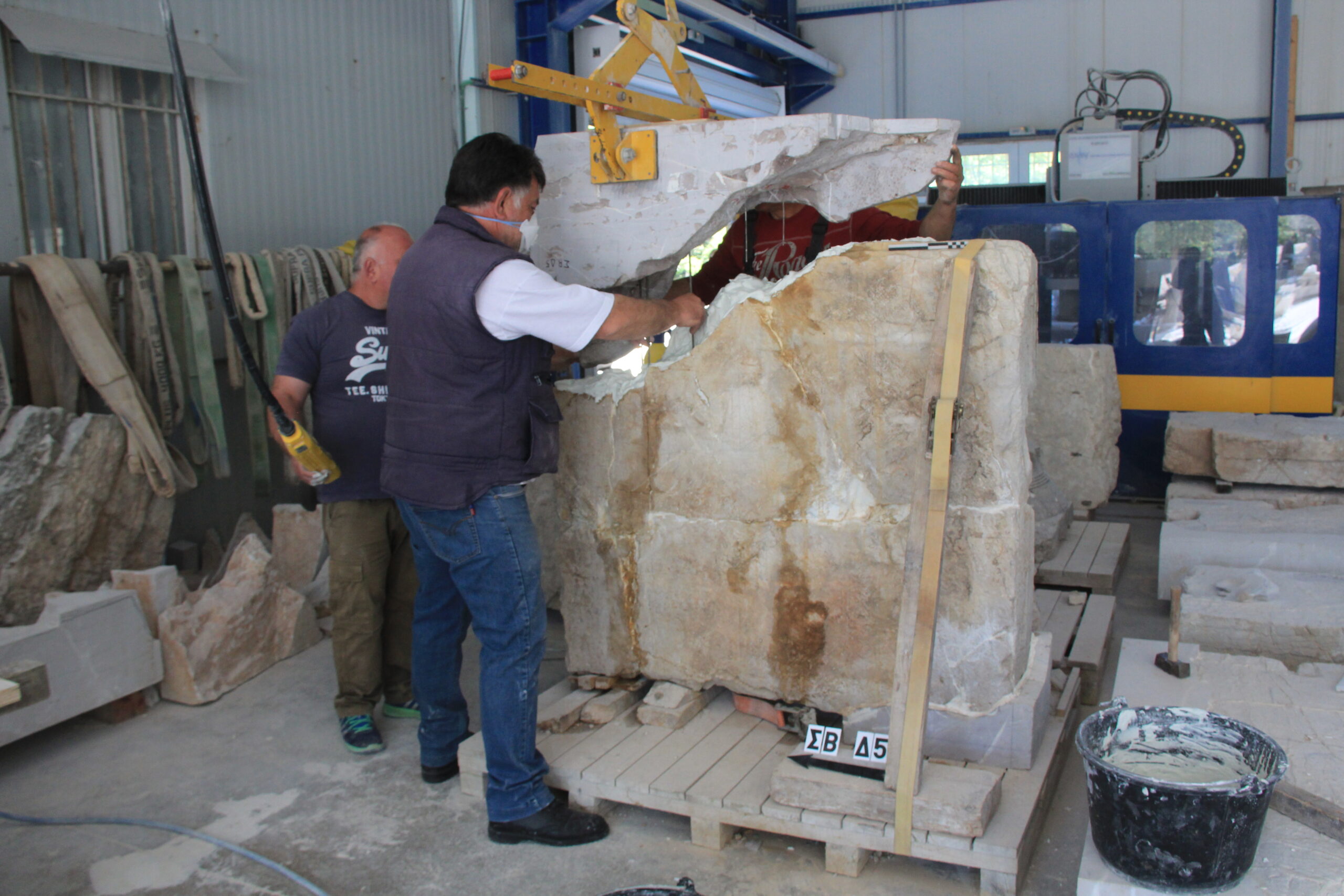
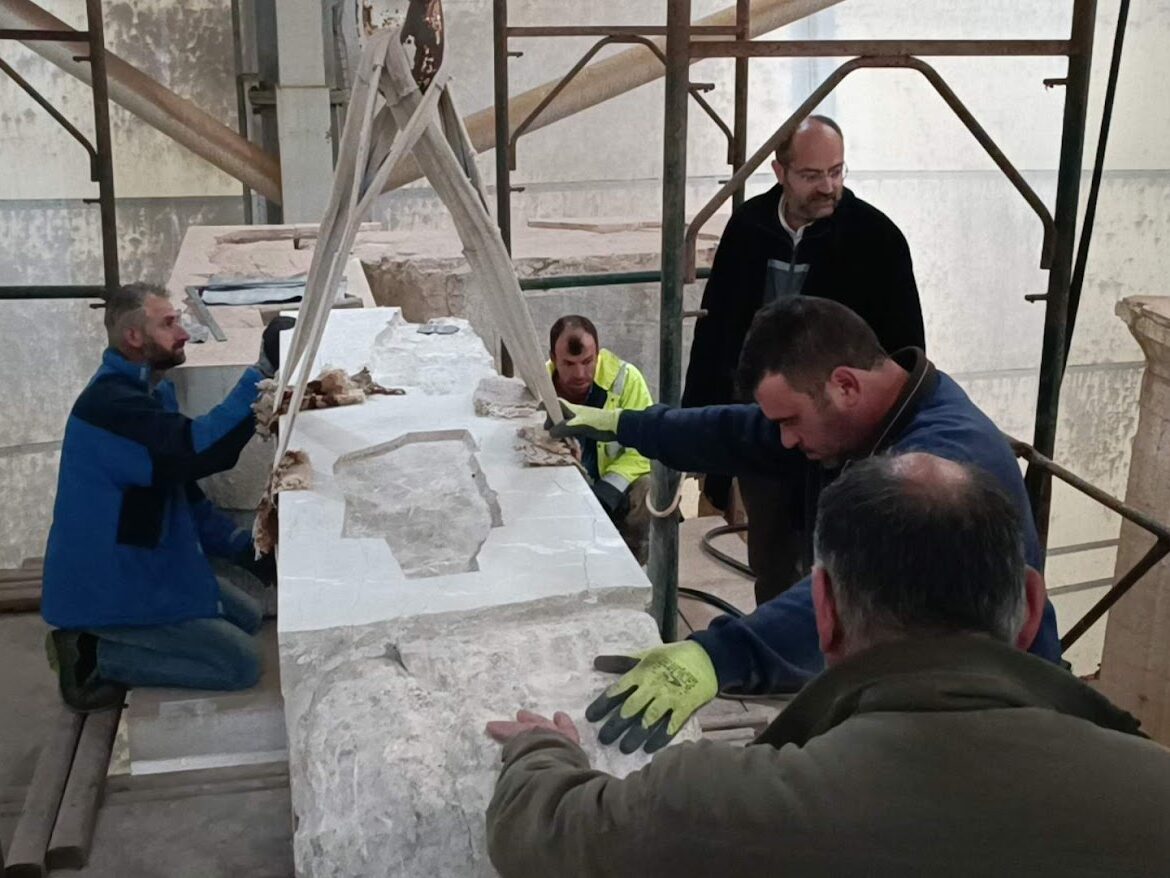
(iii) restoring the integrity of dismantled blocks by joining fragments and supplementary pieces (Fig. 2);
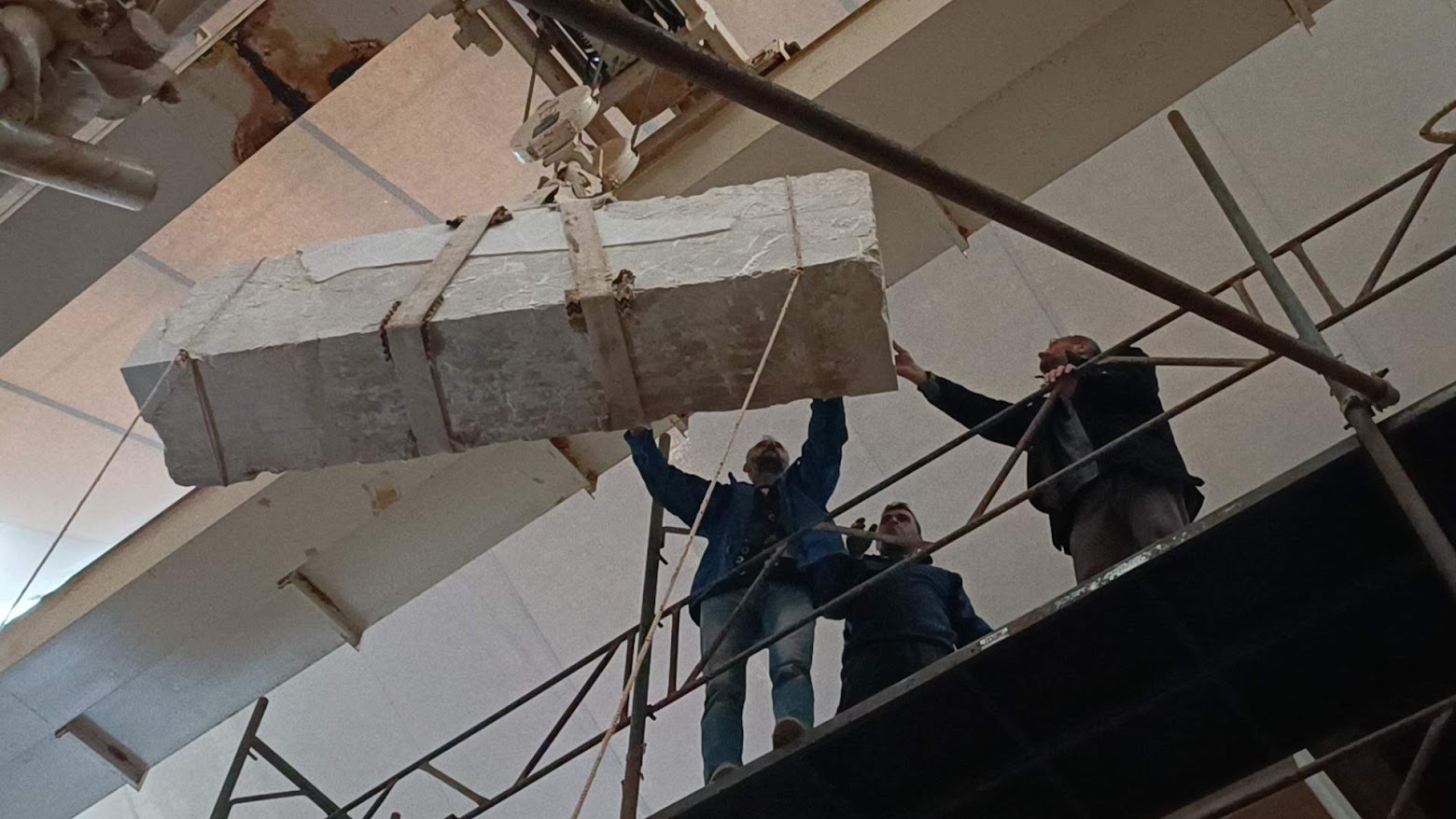
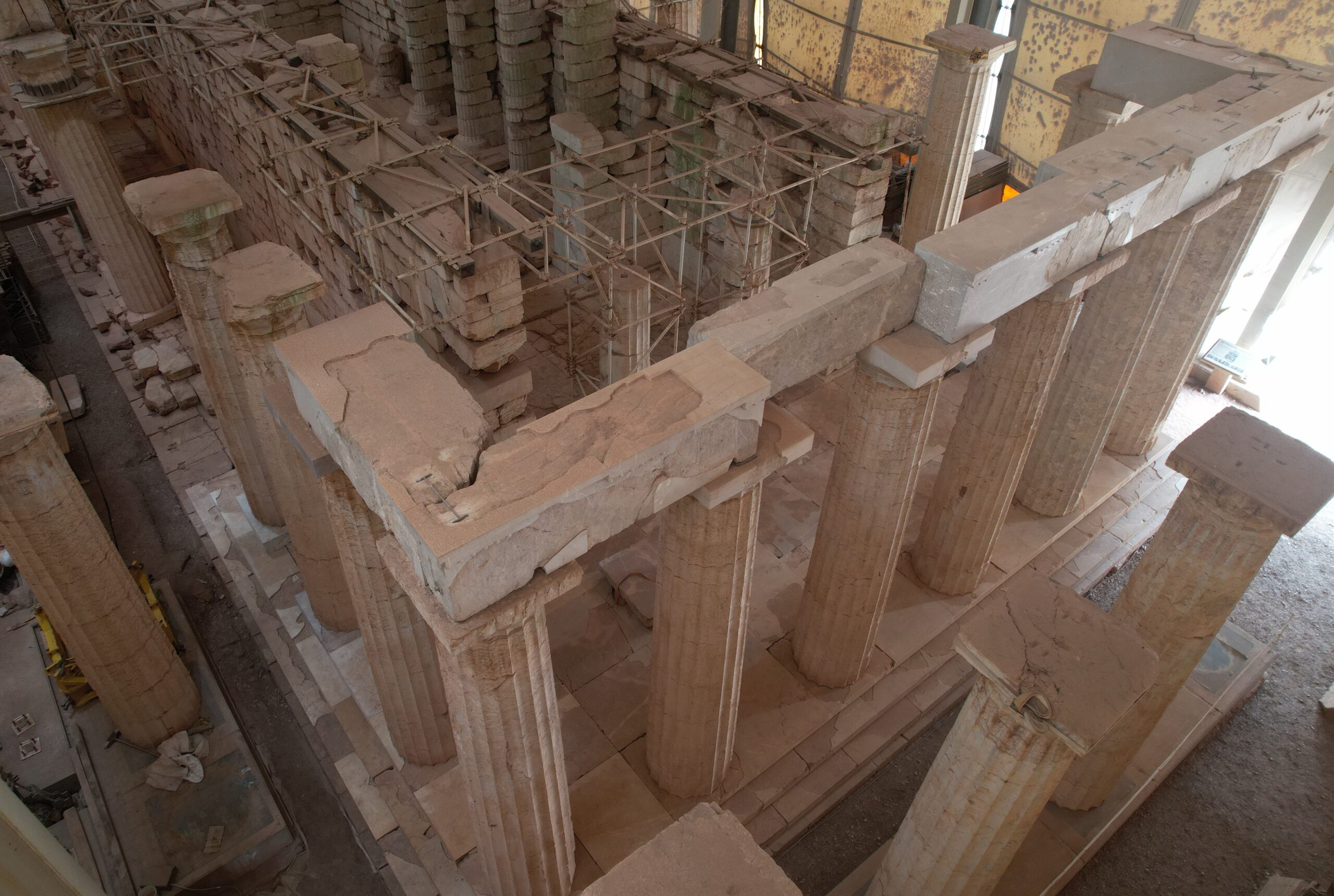
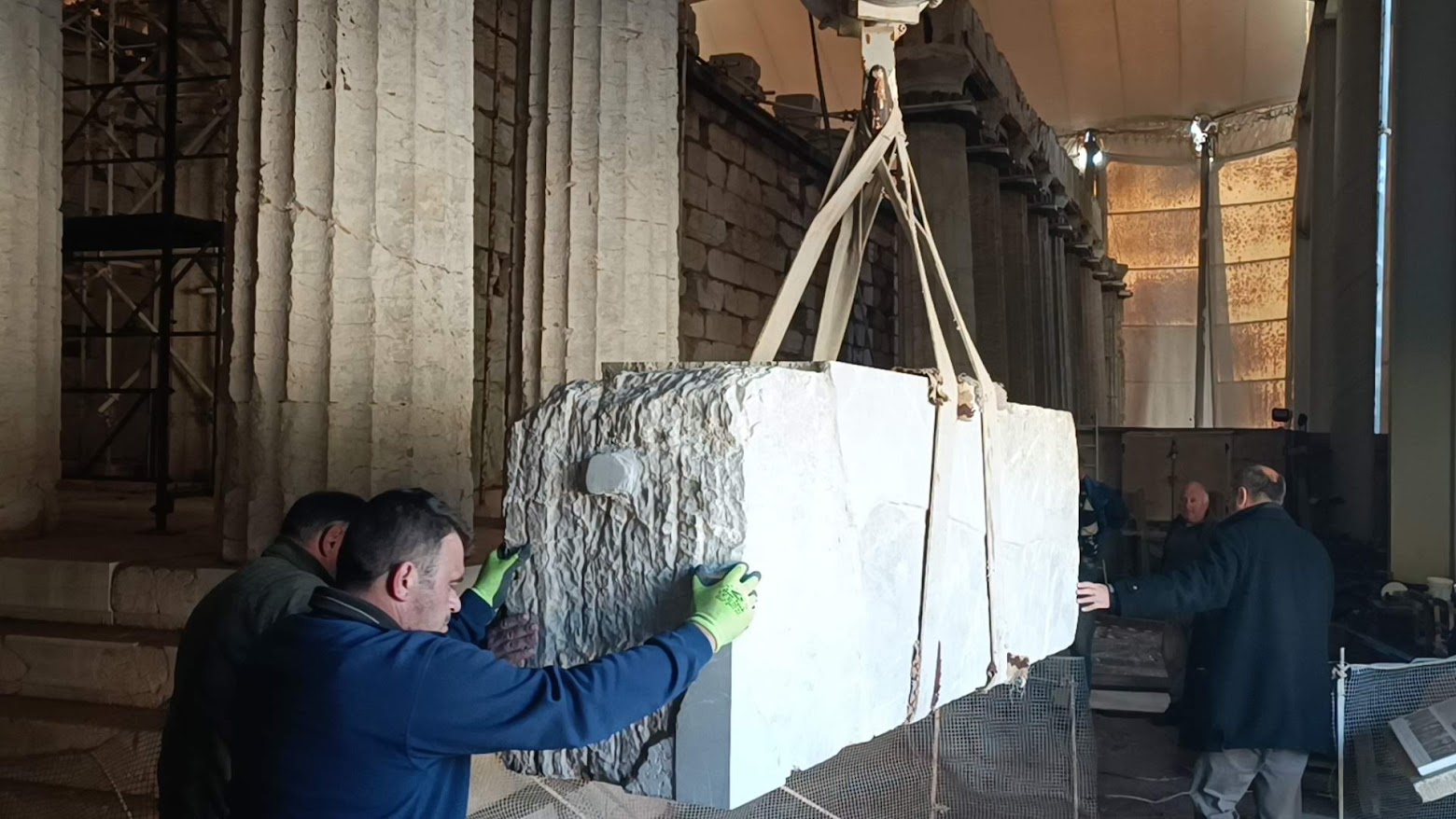
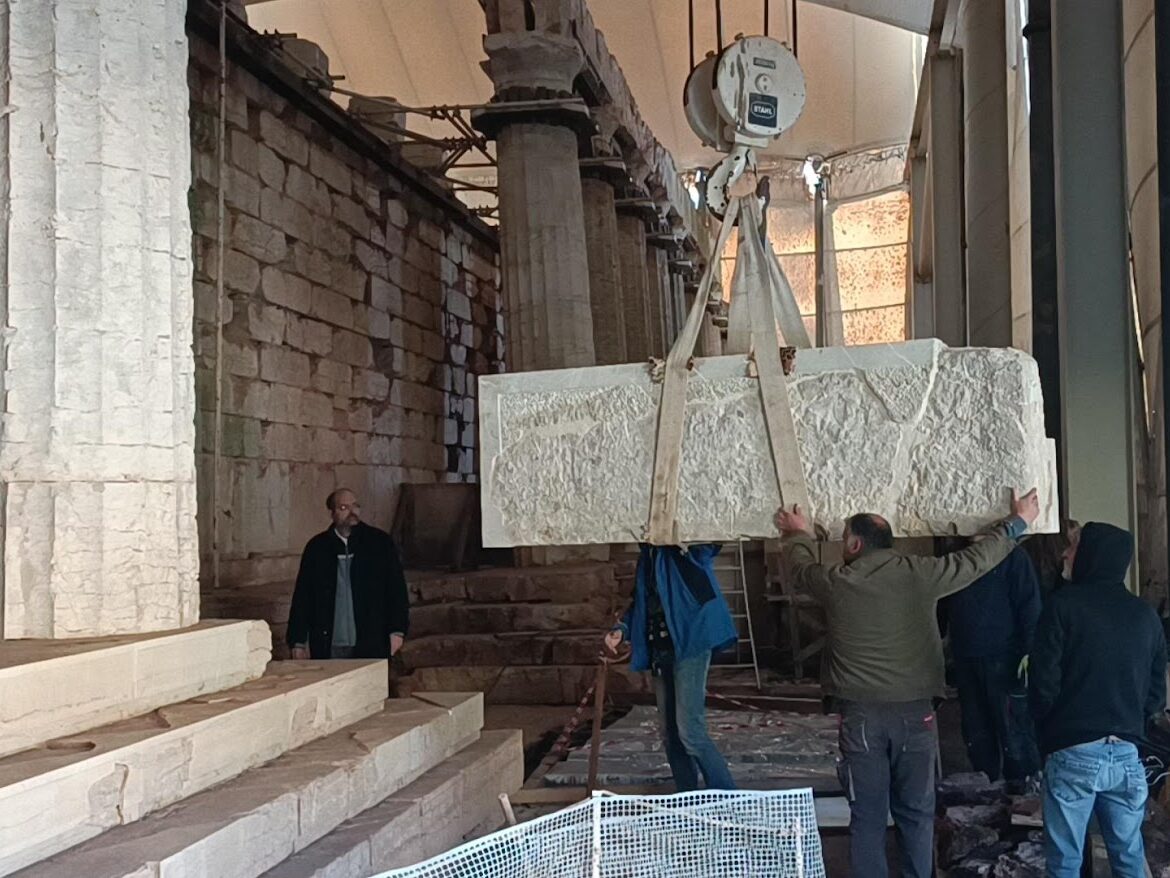
(iv) reinstating the three north architrave blocks (Figs 3–4), returning restored blocks to the long sides and reinstalling the three columns (Figs 5–6); and
(v) reconnecting blocks that had originally been joined, using new titanium connectors.

Totals for the Restoration Programme, 2001–November 2023
reinforced joins of large fragments and supplements to architectural members
carved supplements fitted to ancient members
architectural members restored and reinstated on the monument
entirely new members carved and installed in the ancient temple
These works continued the restoration of the northern pteron undertaken between 2001 and 2015 under ESNEA’s supervision. They successfully completed the first phase of restoration of the long sides and established a firm basis for the programme’s continuation. Three important architectural members were returned to the north façade—one after approximately seven centuries and the other two after about two centuries—restoring the continuity of its architrave for the first time since 1812.
This multifaceted programme seeks not only to conserve and structurally strengthen an ancient building, but to preserve for future generations a monument of worldwide significance. The Temple of Apollo Epicurius has been a UNESCO World Heritage Site since 1986. The project also enhances a site in a remote part of the Peloponnese, a landscape of exceptional natural beauty with many other important archaeological sites, including ancient Phigaleia, the sanctuary of Zeus on Mount Lykaion and ancient Alipheira.