BASSAE / EXPLORE THE MONUMENT
The Sanctuary at Bassae
in the Archaic Period
01 / EXPLORE
The earliest offerings
Archaeological investigations at Bassae have shown that the site of the present temple was already sacred in the eighth century BC. Finds from deposits around the temple suggest the worship of a deity with a martial character. These include arrowheads and spearheads, as well as miniature bronze weapons, helmets and shields offered as votives.


Two male figurines among the finds may depict the deity worshipped here and are among the earliest votive offerings discovered at the sanctuary.
02 / EXPLORE
Phigaleia and Apollo Epicurius
In the seventh century BC, the inhabitants of Phigaleia, an important Arcadian city, turned to Apollo, god of light and divination, for help.
This appeal is associated with the Spartan siege and occupation of Phigaleia, conventionally dated to about 659 BC.
According to the tradition, the Delphic oracle advised the Phigaleians to fight alongside a hundred chosen men from Oresthasion, an Arcadian city in the Megalopolis basin.
The Spartans were expelled and the Phigaleians recovered their city, while the Oresthasian warriors fell in battle. The Phigaleians honoured them with a monument in their agora and dedicated a temple at Bassae to Apollo Epicurius, their helper and protector.
The construction of this temple is generally dated to the late seventh century BC.
03 / EXPLORE
The Archaic temple


The locations of the successive temples that preceded the surviving Classical monument remain a matter of scholarly discussion. According to the prevailing interpretation, the foundations of a large Archaic building immediately south of the Classical temple belong to an earlier temple of Apollo.
This Archaic temple also faced north. It lacked a surrounding colonnade, had mudbrick walls reinforced with timber and was richly decorated with terracotta elements. As in the Classical temple, the interior was divided into two parts; the southern part is interpreted as an adyton with an opening to the east.
Fragments of roof tiles and a disc-shaped terracotta acroterion survive. They have allowed the acroterion to be reconstructed. It stood above the pediment and bore painted geometric decoration, comparable to the central acroterion of the Temple of Hera displayed in the Archaeological Museum of Olympia.
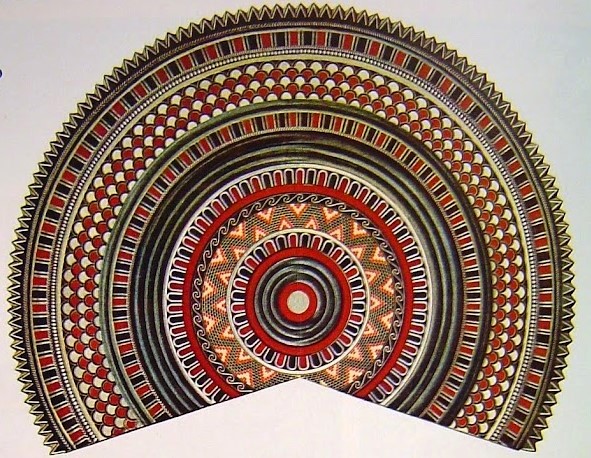
Temple of Apollo Epicurius
Disc-shaped terracotta acroterion of the Archaic Temple of Apollo
Painted decoration with geometric patterns
Other scholars suggest that the Classical temple may stand on the foundations of an earlier building, dated to about 500 BC or before, with the same orientation. Comparable arrangements occur at other regional sanctuaries, including the Temple of Athena and Zeus Soter at Kourdoubouli in ancient Phigaleia and the Doric Temple of Athena at Alipheira.
04 / EXPLORE
Settlement, finds & worship
A small settlement developed around the Archaic temple, which appears to have had two or three building phases, and continued into the Classical period. Messenians displaced by the Spartans may have settled near the sanctuary around 650 BC.
Finds include jewellery, such as rings, studs and pins, and numerous miniature and full-sized vessels, including aryballoi and kylikes. A tortoiseshell lyre soundbox was also discovered. Many finds from Bassae are displayed in the Archaeological Museum of Pyrgos.
Traces of metalworking near the temple indicate that a workshop operated in the area during the Archaic period.
Nikolaos Yalouris, who excavated at Bassae over many years, described numerous Archaic and Classical buildings around the temple, some of monumental character. He also noted that imported objects from Elis, Corinth and Laconia, together with lead votives, reflect the sanctuary’s connections with other parts of the Peloponnese, particularly Laconia.
In the Classical period, the tradition emphasised Apollo’s role as a healing and protective deity. His epithet Epicurius was associated with his aid to the Phigaleians during an epidemic in the Peloponnesian War.